

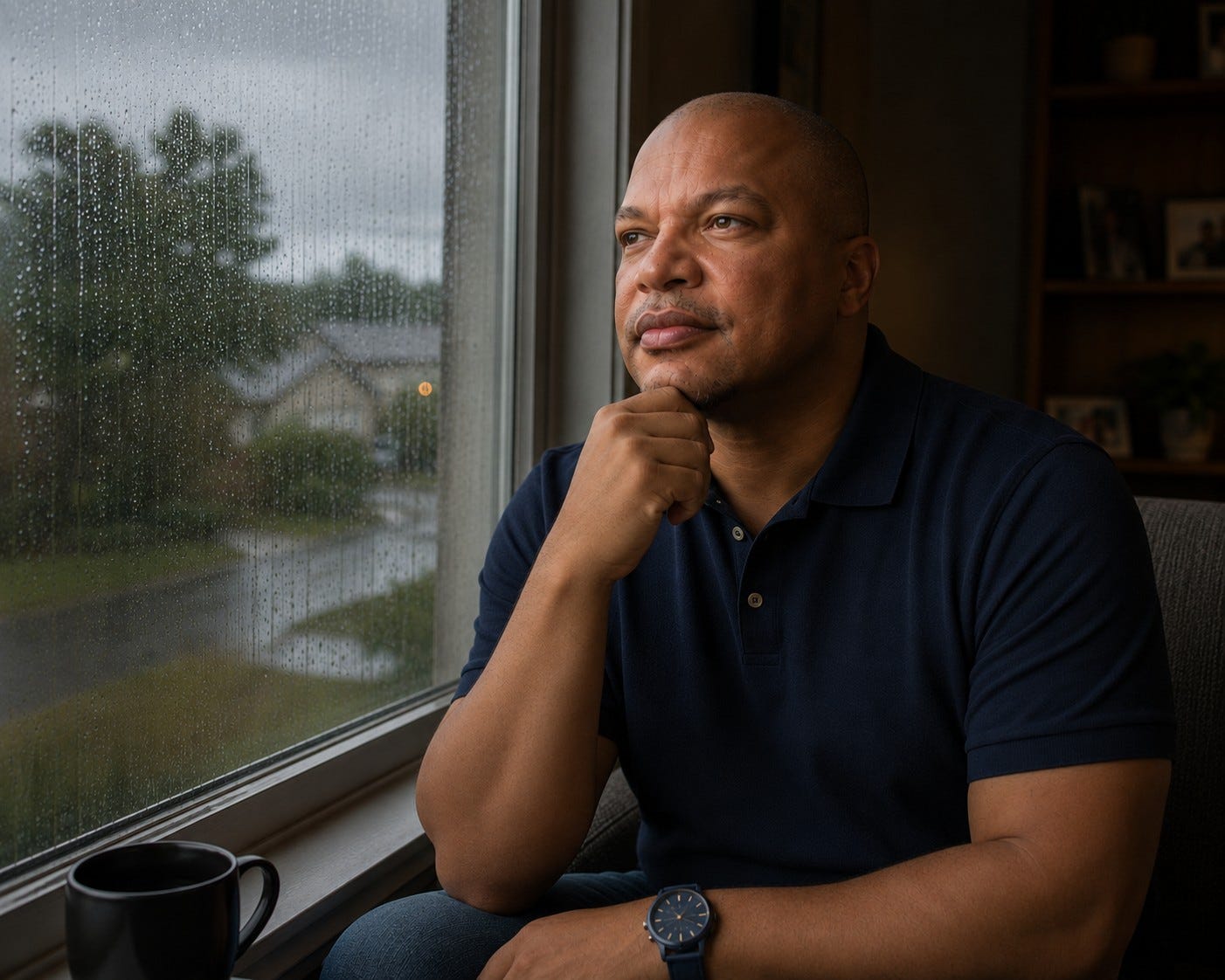
For years, I thought I knew what I wanted.
And I did.
That was the problem.
I knew what I’d wanted five years ago.
Ten years ago.
Maybe twenty.
I just never thought to check whether the answer had changed.
I Had No Reason to Question It
This is the strange part.
I wasn’t unhappy.
There was no morning when I woke up, stared at the ceiling, and thought, I don’t want this life anymore.
Most of it was good.
People I loved.
Things I cared about.
Goals I’d chosen for myself.
I stayed busy.
I showed up.
I kept moving toward things I’d decided were important years earlier.
And because nothing was obviously wrong, I never thought to question any of it.
Why would I?
I’d chosen these things.
Nobody had handed me someone else’s life.
That’s what made it so easy to miss.
Somewhere along the way, I think I started treating old wants like permanent decisions.
If I wanted something at 35 and worked toward it at 42, surely I should still want it at 53.
Except little things started giving me away.
Plans I normally looked forward to began feeling like things to get through.
An empty Saturday sounded better than whatever I’d put on the calendar.
Goals still looked good on paper.
I just couldn’t find much underneath them anymore.
So I blamed the usual things.
“I’m tired.”
“It’s been a busy week.”
“I’ll feel differently next week.”
Next week kept coming.
The feeling didn’t.
I Thought Changing My Mind Meant Something Had Gone Wrong.
This may have been the part I misunderstood for the longest time.
If I’d chosen something for myself, I felt like I owed it loyalty.
Otherwise, what did all those years mean?
“What about the time I’d put into it?”
“What about the people who knew me that way?”
And the harder question:
“What did changing my mind say about me?”
So instead of asking whether I still wanted something, I tried to make myself want it again.
Which sounds a little ridiculous now.
But I did it.
Maybe you have too.
You go looking for motivation when motivation isn’t really the problem.
You tell yourself to try harder.
Get excited again.
Remember why you started.
Anything except asking the quieter question underneath all of it:
“Do I still want this?”
I avoided that question because I assumed a different answer would require a different life.
It didn’t.
Then I Asked a Different Question
Eventually, I stopped trying to get the old feeling back.
Instead, I asked myself:
“If this wasn’t already part of my life, would I choose it today?”
That question cleared the room pretty quickly.
Some things were an easy yes.
A few were an even easier no.
And more than I expected landed somewhere in between.
But for the first time in a long time, I wasn’t asking yesterday to answer for me.
That was the shift.
Nothing dramatic happened.
I didn’t quit everything.
I didn’t discover my purpose.
I didn’t sketch out some grand plan for the next twenty years.
I just stopped assuming an old answer was still the right one.
And things got a little quieter after that.
I could stay home without feeling like I needed a reason.
I could admit that a goal no longer interested me without calling myself lazy.
I could change my mind without deciding the person who made the original choice had been wrong.
He wasn’t.
He wanted what he wanted then.
I want what I want now.
Those two things can live in the same life.
Maybe that’s one of the stranger parts of getting older.
You can spend years becoming the person you thought you wanted to be...
only to find that person has changed too.
I’m still figuring out what I want now.
Some days I know.
Some days I don’t.
But I don’t want to spend another ten years carrying an old answer simply because I forgot to ask the question again.
So every once in a while, I ask:
“If this wasn’t already part of my life, would I choose it today?”
Not Was it worth it?
Not Did I make the right choice back then?
Just...
“Would I choose it now?”
I’m starting to think there’s a lot hiding in the difference.